Investigative Data Report // New York City
The Big Apple's
Big Brother Problem.
LinkNYC was launched in 2015 as a digital-equity program that promised free gigabit Wi-Fi to neighborhoods underserved by home broadband. It has also become the largest warrantless surveillance network operating in the five boroughs, with kiosks concentrated in the neighborhoods least equipped to resist their rollout.
The Background
LinkNYC was built as a public Wi-Fi network. It also functions as a surveillance one.
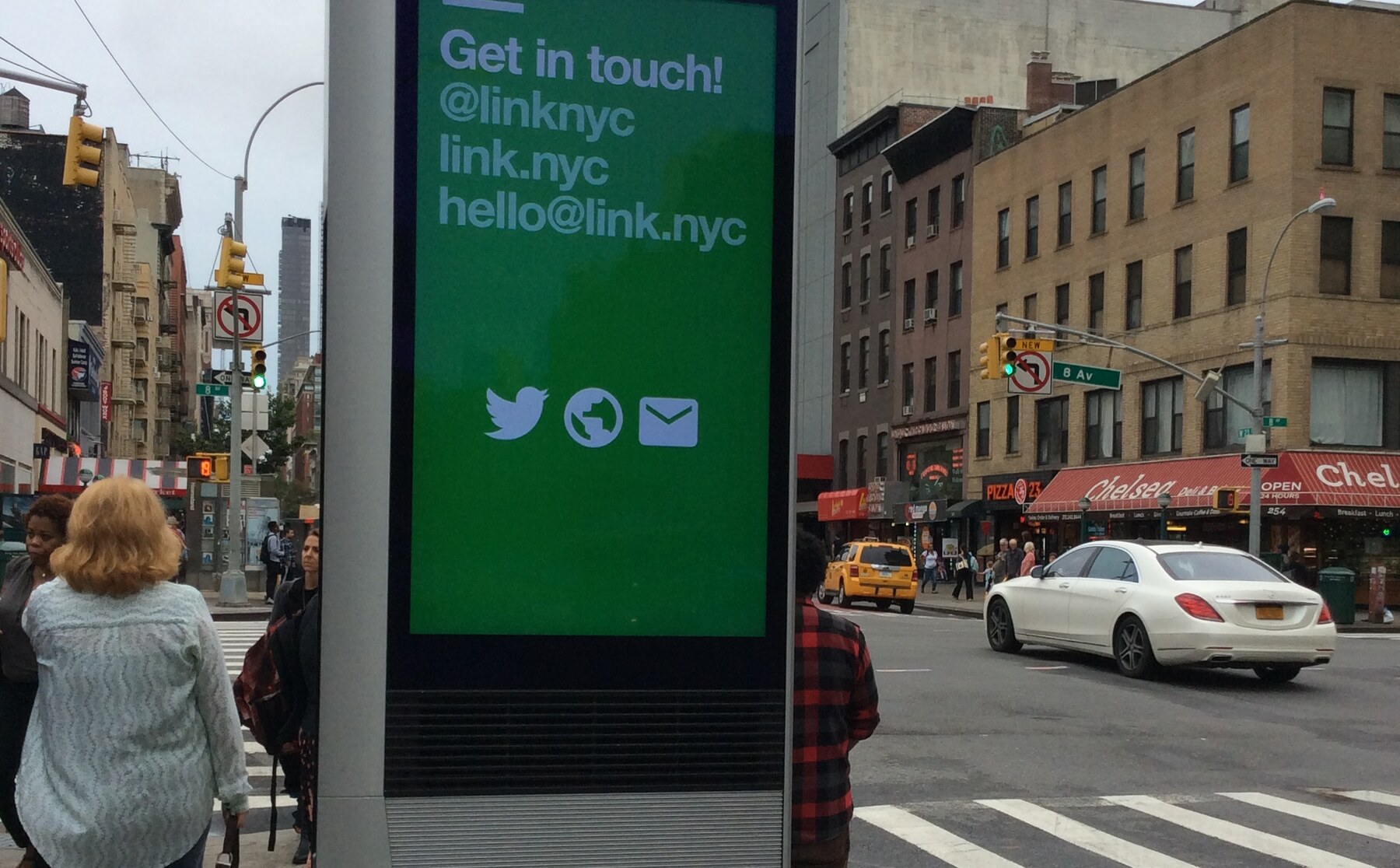
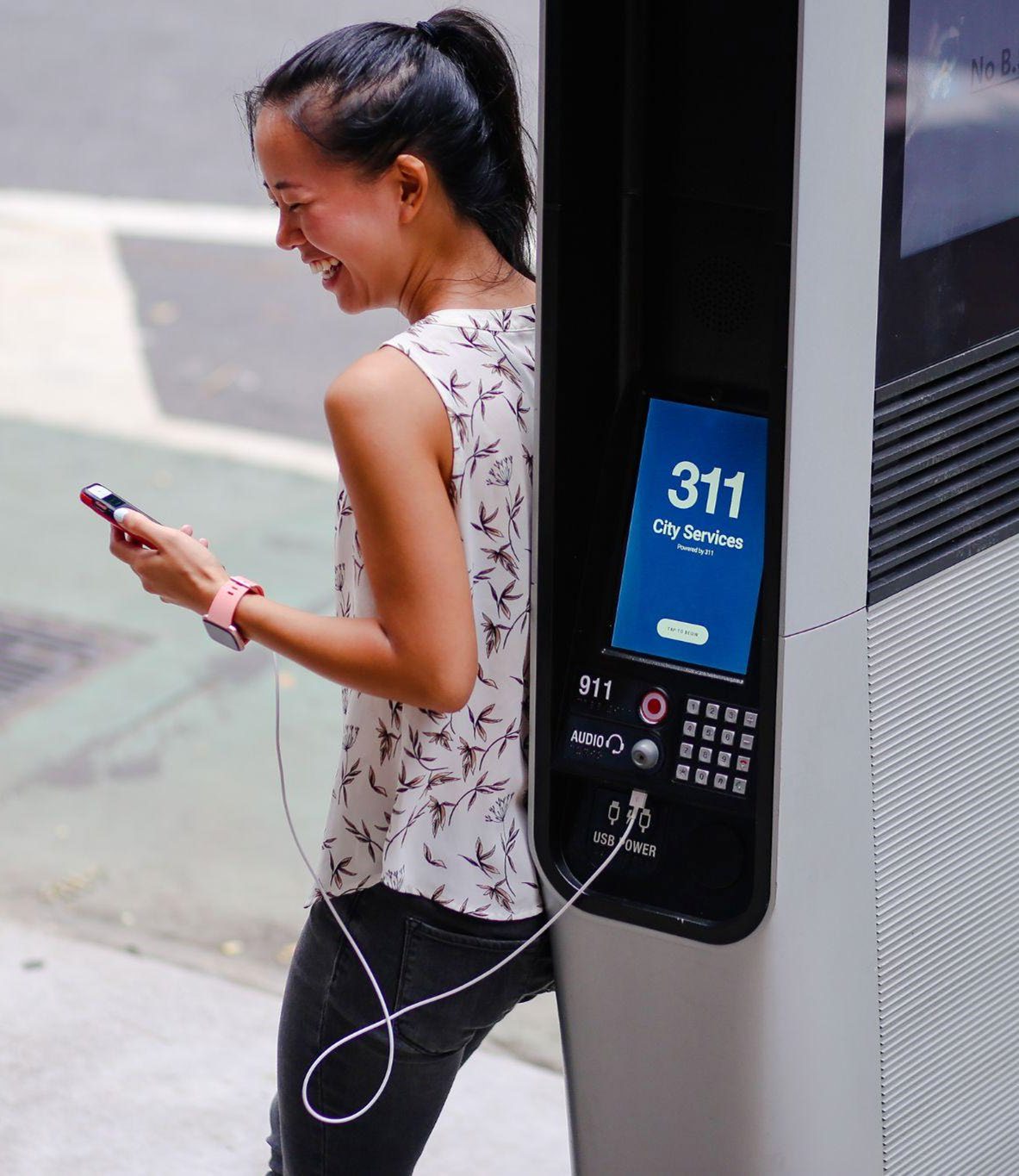
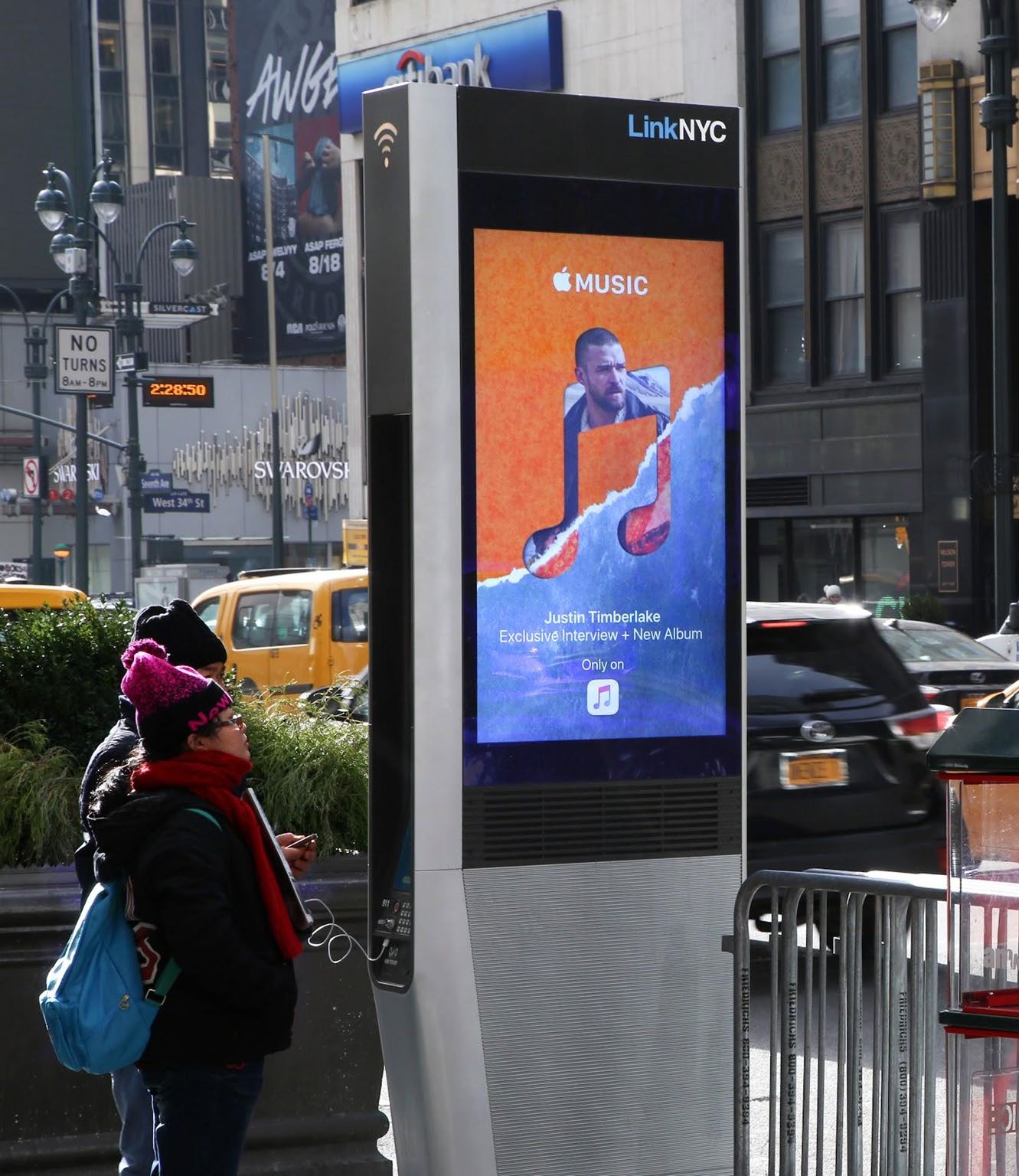
Starting in 2015, New York City began replacing its roughly 13,000 remaining payphones with 9.5-foot steel kiosks offering touchscreens, USB charging ports, and free gigabit Wi-Fi. The program, called LinkNYC, was framed as a digital-equity measure for residents without home broadband. By the end of its first deployment wave, it was the largest public Wi-Fi network in the United States.
The kiosks are owned and operated by CityBridge LLC, a private consortium formed in 2014 to win the franchise. CityBridge has three corporate members: Intersection, an advertising and data company that handles the kiosks' commercial inventory; Qualcomm, which built the hardware; and Boldyn Networks, which manages the connectivity infrastructure and also operates the city's subway Wi-Fi. According to CityBridge's published privacy policy, the kiosks continuously collect device identifiers, camera footage, and environmental sensor readings from anyone within range, regardless of whether they connect to the Wi-Fi.
That collection sits outside the accountability rules the city wrote for its own police department. The Public Oversight of Surveillance Technology Act (POST Act), passed in 2020, requires the New York Police Department to publish impact and use policies for every surveillance tool it operates, including who may access the data, under what conditions, and how long it is retained. CityBridge is not part of the NYPD, and its franchise agreement — negotiated in 2014, before most of the kiosks' surveillance capabilities were public — contains no equivalent disclosure obligation. The result is a surveillance network covering all five boroughs that is not required to publicly account for how it works or who can use it.
The Finding
The NYPD needs a court order to do what LinkNYC does by default.
Under the POST Act, the NYPD's official Impact and Use Policy for “WiFi Geolocation Tracking Devices” requires probable cause and a court order before officers may deploy such a device. CityBridge operates the largest Wi-Fi geolocation network in New York City, and its kiosks rely on the same underlying capability. Neither the franchise agreement nor the company's published privacy policy imposes an equivalent legal threshold. Collection is continuous and does not require a warrant.
NYPD WiFi Geolocation
per POST Act Impact & Use Policy
- Legal threshold
- Probable cause and a court order
- Justification
- Exigent circumstances (e.g. imminent threat to life)
- Scale
- Tactical devices, case-by-case deployment
- Data retention
- Location data is not recorded
- Scope
- Narrow, target-specific
LinkNYC
per CityBridge privacy policy
- Legal threshold
- None; collection is passive and continuous
- Justification
- Proximity to a kiosk; no user action required
- Scale
- 2,255+ fixed kiosks, citywide, always-on
- Data retention
- No fixed limit — the privacy policy permits retention “essentially indefinitely” (NYCLU); identifiers hashed since Dec 2022
- Scope
- Ambient and continuous; not target-specific
NYPD WiFi Geolocation Tracking Devices IUP (POST Act); KPMG audit PF-01; LinkNYC Privacy Policy; NYCLU testimony (2016); NYC.gov POST Act disclosures.
Because the POST Act applies only to surveillance tools the NYPD operates directly, the 2,255+ LinkNYC kiosks logging device identifiers across the five boroughs fall outside its disclosure framework. CityBridge's published privacy policy contains an exemption broad enough to cover most law-enforcement requests: data and footage may be shared with police “to detect or address illegal activity” or where disclosure is “useful to protect safety.” Camera footage has been handed to NYPD investigators without a warrant requirement, according to documentation summarized by the Surveillance Technology Oversight Project (S.T.O.P.).
S.T.O.P.'s “Dragnet City” report (October 2025) describes how that material moves further into the NYPD's Domain Awareness System (DAS), a fusion platform that, according to the report, integrates more than 80,000 cameras, an estimated five million license plate reads per day, drone feeds, and 911 call records. The DAS produces what the report calls “entity reports” on individual New Yorkers, drawing on appearance data, social affiliations, 311 call history, sealed arrest records, and DNA, and accessible from officers' smartphones. The report further documents NYPD data flowing onward to federal agencies, including U.S. Immigration and Customs Enforcement — a pipeline examined in detail in the Who Pays section below. Civil-liberties advocates including the NYCLU and S.T.O.P. have characterized this combination — extensive private collection feeding a public surveillance system with limited public oversight — as a structural feature of the way the city built its surveillance capacity, not an incidental gap.
The Machine
LinkNYC kiosks identify devices that never connect to them.
The program operates at no direct cost to taxpayers; its revenue comes from digital advertising and data services rather than municipal funding. That business model is built into the hardware.
Intersection, the advertising and data subsidiary within the CityBridge consortium, markets the kiosks to brands as a “context-aware platform” for reaching pedestrians as they move through physical space. According to the NYCLU's review of Intersection's marketing materials, the company promises advertisers “hypertargeting in the physical world,” delivering audiences by attributes such as ages 18–34, college-educated, and high-income — or a profile combining all three — based on demographic and location-based data drawn from the kiosks' immediate environment. To deliver that level of targeting, each kiosk operates first as a sensor platform and second as a Wi-Fi access point.
Each kiosk carries two HD cameras, Wi-Fi access points, Bluetooth beacons, and environmental sensors that monitor noise, temperature, light, and air quality. According to CityBridge's privacy policy, camera footage is retained for seven days. The Wi-Fi and Bluetooth radios continuously scan for nearby devices, logging the unique MAC address each device broadcasts whenever Wi-Fi or Bluetooth is enabled. Collection occurs whether or not the device's owner connects to the LinkNYC network, and whether or not the owner is aware the kiosk is present.
The 32-foot Link5G towers introduced in 2022 represent a massive escalation in hardware scale. According to the city's 2021 Design Proposal, the height is a technical requirement to support multi-tenant 5G transmitters while complying with FCC safety regulations. To mitigate the “bulky presence” of these industrial poles, the consortium utilized translucent materials and stainless steel finishes designed to “reduce the perceptual impact” and “humanize the scale” of what is effectively a citywide cellular grid.
Modern smartphones partially mitigate passive identification through MAC address randomization, a feature in which the operating system broadcasts a fresh, fake identifier to each new network. Academic research has shown that the defense is incomplete. A 2024 survey published in Security and Safety documents that Wi-Fi probe requests still leak structured timing patterns and behavioral fingerprints, and that a device's radio hardware emits a distinguishable physical signature — Radio Frequency Fingerprinting (RFFI) — that persists across software-level address changes. A 2025 paper introducing the MobRFFI system applies the technique specifically to non-cooperative re-identification of mobile devices for mobility-intelligence applications, the category that includes networks like LinkNYC.
The three CityBridge companies jointly manage the data flows generated by the kiosks under the franchise agreement. The NYCLU has summarized the result in a single sentence.
“LinkNYC is a barely mitigated privacy disaster.”
Continuous recording; latent facial-recognition input.
Wi-Fi and Bluetooth radios intercept the device's MAC address without requiring a connection. Movement patterns become inputs to advertising and location analytics products.
A second, independent logging channel: a phone with Wi-Fi switched off but Bluetooth enabled is still registered each time it passes within range.
Potential expansion of use into incident response; possible Domain Awareness System integration.
Algorithmic fusion via Intersection backend. Audience segments built from attributes such as age, income, and education — what Intersection markets as “hypertargeting in the physical world.”
The hardware-level counterpart to MAC logging: as detailed above, RFFI techniques match a device's radio signature even after its software identifier changes.
There is no way to opt out of passive identification short of disabling Wi-Fi and Bluetooth entirely — typically by enabling Airplane Mode — while within range of a kiosk. Civil-liberties advocates have cited the absence of any practical opt-out as evidence that the network operates without a meaningful consent mechanism.
The Geography
Every kiosk. Every borough. Live.
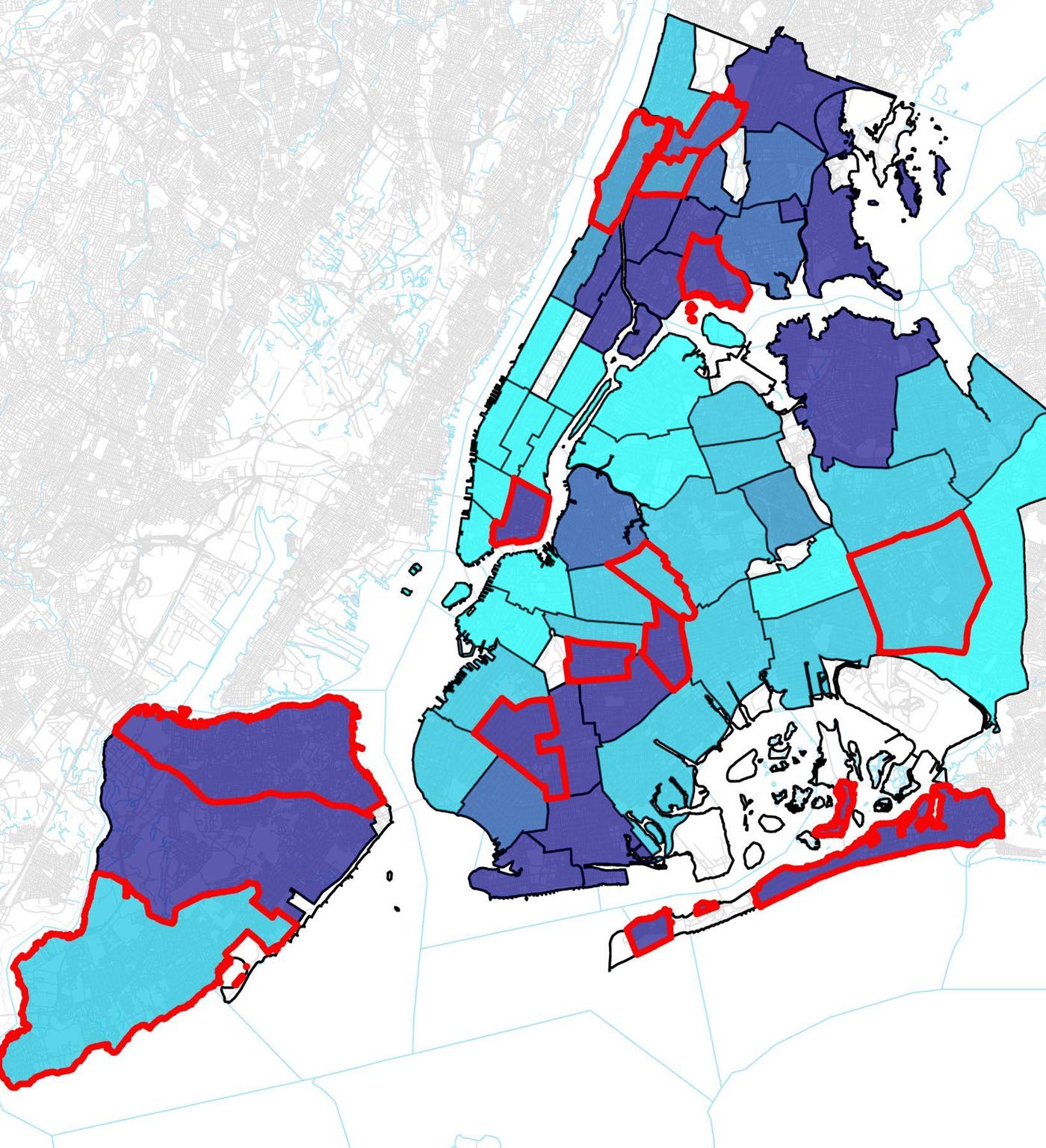
Map showing the geographic distribution of LinkNYC surveillance kiosks. Original Link 1.0 kiosks (blue) are concentrated in Manhattan commercial corridors. Link5G kiosks (pink and amber) are deploying primarily in outer-borough neighborhoods under the 90% equity mandate. Kiosk counts update live from NYC Open Data — see the borough broadband chart below for numerical comparisons.
Loading live data from NYC Open Data…
The first wave of kiosks was concentrated in Manhattan.
The Link 1.0 deployment placed the majority of its kiosks in high-income Manhattan commercial corridors. According to NYC Mayor's Office data, fewer than 10% of the original LinkNYC kiosks were sited in the Bronx, the borough with the highest rates of digital disconnection and poverty in New York City.
A 2025 paper in Technological Forecasting and Social Change, titled “From phone booths to Wi-Fi kiosks: the spatial inequality of public connectivity in New York City,” analyzed the rollout using spatial-statistics methods and concluded that the program operated independently of broadband need and did not reduce digital inequality. Civil-liberties advocates including the NYCLU have argued that the distribution reflects the network's funding structure, which depends on advertising revenue concentrated in commercial areas with heavy pedestrian traffic.
The franchise was renegotiated after CityBridge fell into arrears.
By 2019, the original advertising-only financial model had failed, leaving CityBridge $70 million in arrears to the city. The 2021 franchise amendment was a survival pivot: a shift to a mixed revenue model based on 5G cellular services. This shift requires extreme density; because high-frequency 5G “mmWave” signals travel only about 450 feet, the network must deploy a much larger number of access points to achieve pervasive coverage.
Reporting by THE CITY in April 2022 described the renegotiation as a shift in revenue model, under which CityBridge would lease space inside the new poles to cellular carriers as 5G antenna platforms. Subsequent reporting by Gothamist in July 2024 found that, of approximately 200 Link5G towers installed by that point, only two had carrier equipment fitted, indicating that the major U.S. wireless companies had not yet committed to the new platform. The kiosks' sensor and Wi-Fi capabilities, however, were operational throughout that period.
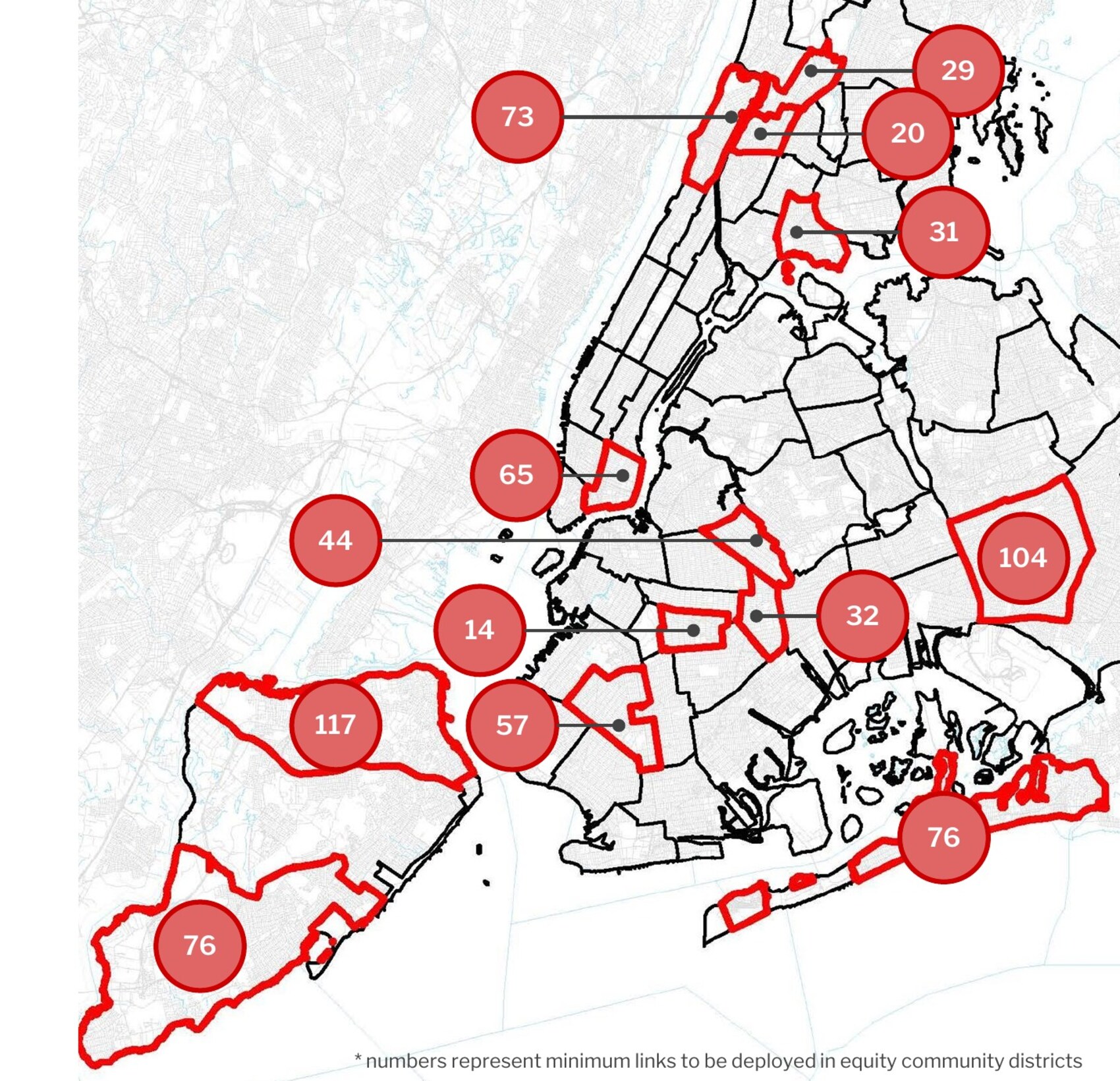
A 90% outer-borough mandate accompanied the new hardware: under the renegotiated franchise, nine of every ten new Link5G units must be sited in the outer boroughs or above 96th Street in Manhattan. NYC Mayor's Office documents identify 739 specific kiosk locations across 13 community districts selected for low median income, severe broadband gaps, and the absence of existing LinkNYC infrastructure.

Future kiosk deployment is concentrated in the boroughs with the largest broadband gaps.
The chart below compares borough-level broadband deficit (per American Community Survey 2018–2022 data via NYC OTI) with projected Link5G deployment under the current franchise terms. The Bronx, which has the city's highest broadband deficit, is also projected to receive the largest share of new Link5G kiosks. According to civil-liberties analysts including S.T.O.P. and the NYCLU, this pattern means the surveillance footprint of the program will be largest in the same neighborhoods that the original LinkNYC rollout did not adequately serve, per the 2025 spatial-inequality analysis cited above.
-
Bronx
-
Brooklyn
-
Staten Island
-
Queens
-
Manhattan
The Audit
A 2021 audit found that CityBridge had violated its privacy obligations for years.
In 2021, the New York City Office of Technology and Innovation (OTI) commissioned KPMG to audit CityBridge's compliance with the privacy provisions of its franchise agreement. The resulting report was posted to an OTI web page in January 2023 with significant redactions and no accompanying public announcement. Its findings surfaced six months later, in June 2023, when the NYCLU and the Surveillance Resistance Lab presented them in testimony to the New York City Council Committee on Technology. The NYCLU's testimony notes that it took “many months and repeated outside pressure” before OTI released the audit at all.
The Wi-Fi sign-on page displayed Intersection's privacy policy rather than LinkNYC's — in every instance the auditors tested. Users were shown the terms of the consortium's advertising subsidiary rather than the policy that actually governed their data.
Welcome emails sent to new LinkNYC users lacked the unsubscribe link required under the federal CAN-SPAM Act of 2003.
The splash page omitted contractually required information: the mandated disclaimer that the City of New York is not responsible for material delivered over the Wi-Fi service, and a link to the correct version of the Terms of Service.
Who Pays
The neighborhoods with the fewest privacy alternatives bear the largest share of the surveillance load.
Residents with private home broadband or unlimited cellular data can largely avoid using LinkNYC. Lower-income residents, undocumented immigrants, and unhoused New Yorkers who rely on public Wi-Fi for routine internet access often cannot. For these users, the network functions less as an optional service than as primary infrastructure.
The scale of this reliance is documented in the network's own usage figures. In 2025, LinkNYC facilitated approximately 473,000 free phone calls per month, with the New York State EBT helpline consistently ranking as the most frequently dialed number from both kiosks and Link5G poles. For many New Yorkers, the trade-off between privacy and accessing essential state benefits is not a choice, but a structural requirement of survival.
This structural reliance complicates the “public support” narrative marketed by the consortium. While a 2025 HarrisX survey commissioned by LinkNYC claims that 77% of New Yorkers support the installation of Link5G smart poles, the report notes that support strengthens only after hearing a brief description of their benefits. Critics argue that this framing masks the surveillance trade-off, presenting the infrastructure as a neutral public utility rather than a dual-use sensor grid.
Academic and civil-liberties literature uses the term digital redlining to describe systems in which historically underserved communities receive expanded service only when that service is bundled with monitoring or extractive terms. According to NYC Mayor's Office documents, the 13 community districts designated for mandatory Link5G deployment under the renegotiated franchise were selected for high broadband deficit and low median income. Independent research documents that many of the same areas also carry long histories of intensive policing: Amnesty International's Decode Surveillance NYC project found that in the Bronx, Brooklyn, and Queens, the higher a neighborhood's proportion of non-white residents, the higher its concentration of facial-recognition-compatible CCTV cameras. The neighborhoods slated to receive the largest share of new kiosks are therefore also the neighborhoods most likely to experience the kiosks' data flows in the context of law-enforcement use.
The city's own evidence
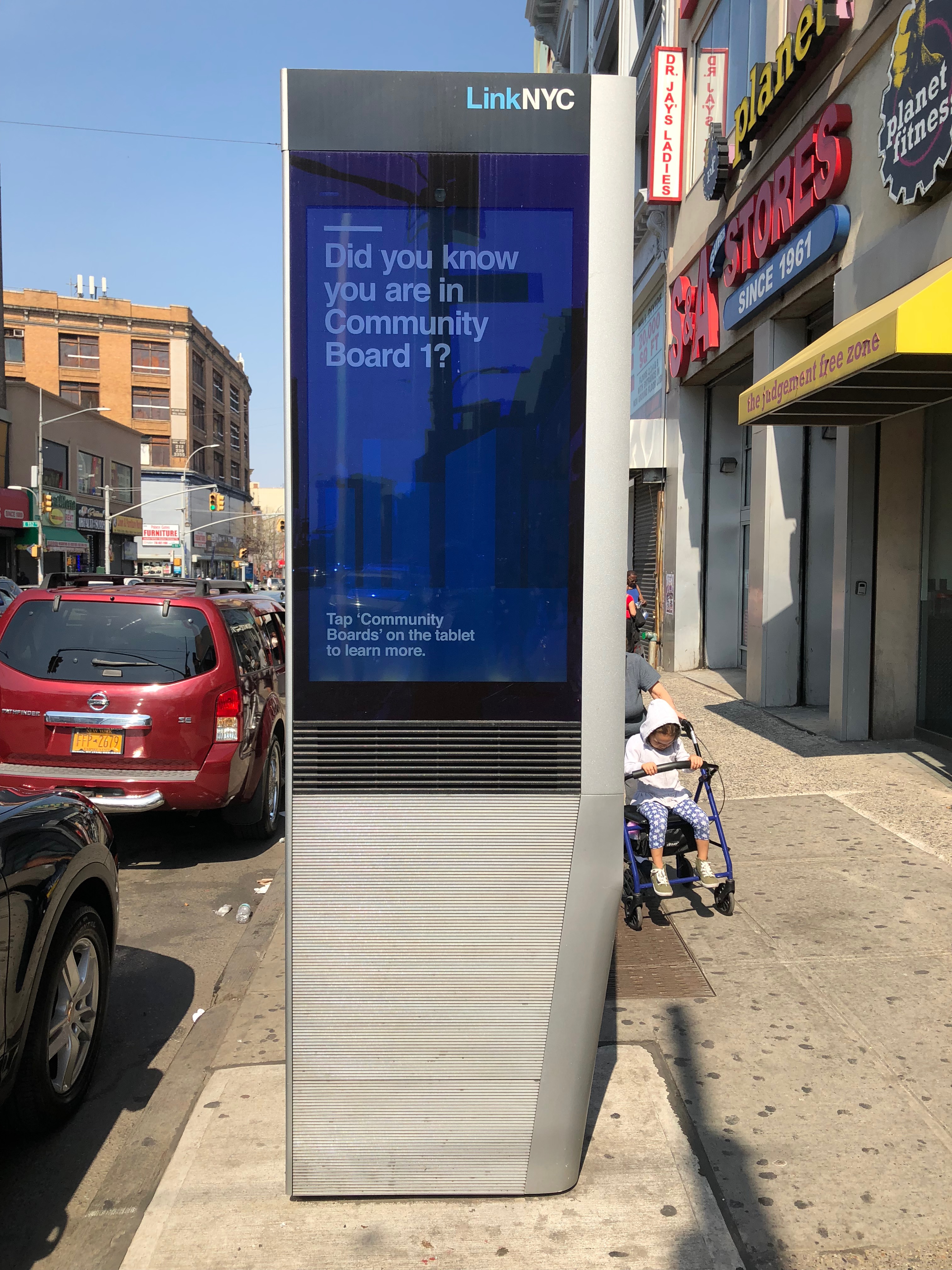
Wealthy historic districts
Upper East Side, Tribeca, Carnegie Hill, Financial District.
- Community Board 1 moratorium resolution
- FRIENDS of the Upper East Side legal campaigns
- Landmarks Conservancy aesthetic objections
- Congressman Nadler petition to FCC under NHPA §106
Mandated rollout districts
Brownsville, Hunts Point, Jamaica, Inwood, Stapleton.
- No equivalent preservationist institution
- No federal-level political champion
- Bound by the 90% outer-borough mandate
- Already heavily policed by Domain Awareness System
A 2025 report by the Surveillance Technology Oversight Project found that this population has been integrated into the city's broader surveillance apparatus through other means as well. According to the report, the Adams administration connected NYCHA security cameras to the NYPD's Domain Awareness System using NYCHA's own Wi-Fi infrastructure, without notification to residents, the City Council, or public housing administrators. The report states that one NYCHA campus was already streaming live to NYPD smartphones at the time of its publication and that the program contemplated expansion to 19 additional campuses. S.T.O.P. also cites prior NYPD acknowledgments that officers had used DAS camera feeds in NYCHA buildings for non-investigative purposes, including, in the report's wording, “for entertainment.”
“Facial recognition gets it wrong, leading to the false arrest of New Yorkers of color — and can be easily weaponized against protesters, activists, or religious communities exercising their fundamental First Amendment rights.”
S.T.O.P. has further documented downstream consequences of the city's data integration. According to the organization, U.S. Immigration and Customs Enforcement (ICE) has accessed NYPD automated license-plate-reader data, and sealed records — records legally protected from disclosure under New York State law — have been shared with federal agents and used against a pro-Palestinian protester in deportation proceedings. The organization has also identified private contractors that simultaneously advise city agencies and ICE's enforcement operations. For undocumented New York City residents who rely on LinkNYC as a primary internet connection, the report concludes, these documented downstream uses materially affect the privacy implications of using the network.
A separate municipal program, Big Apple Connect, indicates that the city has an existing alternative for delivering broadband to its lowest-income residents that does not depend on the LinkNYC infrastructure. According to a September 2025 announcement from the Mayor's Office, Big Apple Connect provides free in-home broadband and basic cable to approximately 330,000 NYCHA residents across 220 developments. The program does not use ambient sensors, captive portals, or third-party advertising infrastructure, and was extended in September 2025 to run through June 2028. Civil-liberties advocates have argued that the program demonstrates that municipal broadband initiatives need not incorporate the data-collection model used by LinkNYC.
The deployment pattern observed in New York has been replicated in other cities. A 2025 paper in Policing and Society, titled “Digital policing of homeless and other marginalised groups in smart cities,” tracked the rollout of InLinkUK smart kiosks in London's Tower Hamlets and identified a parallel correlation between kiosk deployment in lower-income neighborhoods and intensified data-driven policing operations. The authors attribute the similarity to comparable public-private funding and contracting structures in both cities.
What Can Be Done
The Digital Fairness Act would change the legal status of LinkNYC's data collection.
The New York State Legislature is considering legislation that would directly address the legal gap that allows LinkNYC's current data-collection practices. The Digital Fairness Act, introduced as Senate Bill S4276 in February 2025, is currently under review by the State Senate Committee on Internet and Technology. As of this writing, no companion bill has been introduced in the Assembly. According to NYCLU analysis, the bill remains positioned to move out of committee during the current legislative session if it receives sufficient constituent engagement.
The bill would require any business holding the personal information of 500 or more New York State residents to provide meaningful, affirmative notice before that data is collected. The 500-record threshold is calibrated to the total volume of data held by an entity rather than to per-location traffic, with the effect of exempting small local businesses while applying to commercial-scale data operators such as CityBridge. The bill also restricts discriminatory targeted advertising and establishes accountability requirements for automated decision systems used in government and business contexts.
- Affirmative consent requirement: opt-in required before passive collection of device identifiers; directly addresses the violation identified in KPMG finding PF-01.
- Application to private contractors: the bill applies to private operators such as CityBridge, not only to surveillance tools owned by the NYPD; closes the gap that places LinkNYC outside the POST Act framework.
- Automated-decision accountability: the bill establishes oversight requirements for algorithmic systems used in housing, credit, employment, and government decisions.
Because there is no practical way for an operator to obtain affirmative consent from a passerby, the passage of the bill would effectively require operators of ambient-data networks such as LinkNYC to restrict collection to individuals who actively connect to the network and accept its terms of service. The sensor hardware would remain in place; the passive collection from non-users would not, according to civil-liberties analysts including the NYCLU. The NYCLU has published a formal legislative memo in support of the bill, and in May 2026 the State Senate advanced a related surveillance-pricing bill, S8623. No Assembly member has yet introduced a companion to S4276 — without one, the bill cannot become law even if the Senate passes it.
Tell your rep to pass S4276.
The bill is currently in committee, and no Assembly companion has been introduced yet. Constituent contact is the most direct way to register support and push for a companion bill. Two steps are outlined below.
Step 1 — Copy this message
Paste the message into the contact form on each representative's official page. Adding your neighborhood and a brief personal sentence is more effective than a verbatim send.
Step 2 — Send it to your representatives
Use the official NY State lookup pages to find your Senator and Assembly Member, then paste the letter into their contact form. Your Assembly Member's ask is slightly different — see the letter above — since no companion bill exists yet.